AI News & Trends: The 10 Biggest AI Shifts of Mid-2026 (Explained for Beginners)
If you've felt like AI news is moving faster than you can read it, you're not imagining things. In the last six months alone, we've seen new flagship models launch almost weekly, a major AI company report its first profit, wearable AI devices go mainstream, governments race to write new rules, and a completely new way of getting found online — called AEO (Answer Engine Optimization) — start to matter more than traditional SEO.
This guide breaks down the AI news and trends that actually matter, in plain language, with zero jargon left unexplained. Whether you are completely new and looking for The Ultimate Guide to Getting Started (No Coding Required) or you're here to spot your next AI side hustle idea, this is your mid-2026 catch-up.
1. The AI Model Wars Heated Up — And Prices Crashed
The first half of 2026 turned into an all-out race between AI labs to release the smartest, cheapest models. Google pushed out a major update to its Gemini line with dramatically stronger reasoning and science performance, setting new records on academic benchmarks. Around the same time, a Chinese lab released one of the strongest open-weight coding models the industry has seen, at a fraction of the usual cost.
Why this matters for you: open-weight and budget-friendly models are now genuinely competitive with the big paid names. If you've been paying premium prices for AI tools, it's worth shopping around — the "cheap option" in 2026 is no longer automatically the weak option. Check out the 7 AI Tools Beginners Are Using In 2026 (No Coding Required) to see which budget-friendly platforms are leading the pack.
2. One Major AI Company Reported Its First Real Profit
For years, the story around AI companies was simple: massive spending, massive losses, and a bet that profits would come "eventually." That eventually appears to have arrived for at least one major lab, which reported it was on track for its first operating profit this year, driven heavily by developers paying for AI coding tools rather than casual chatbot use.
Meanwhile, a rival lab is still projecting billions of dollars in losses for the year, betting instead on massive infrastructure investment. This split shows two very different strategies playing out in real time: profit now through enterprise tools, or scale now and profit later.
3. AI Coding Tools Became a Real Career Threat — and Opportunity
AI-assisted coding has quietly become one of the biggest AI battlegrounds. One major coding assistant now reportedly powers a huge share of the entire AI coding market, and at least one platform ended its flat-rate pricing in favor of usage-based billing — a sign that AI coding tools are shifting from "cheap experiment" to "serious business expense."
If you're a beginner exploring AI, this is a strong signal: AI coding literacy (not necessarily full programming skill, but knowing how to direct AI coding tools) is becoming a genuinely valuable skill for freelancing and remote work.

4. Governments Started Actually Regulating AI
Regulation talk turned into regulation action this year. In Europe, a major enforcement deadline for high-risk AI systems moved closer, pushing companies to prove their AI tools are safe before deploying them. In the United States, lawmakers introduced a lengthy federal AI bill and debated whether individual states should be allowed to keep writing their own AI laws.
There was also a notable first: a government issuing emergency export restrictions on an advanced AI model, treating cutting-edge AI systems more like sensitive technology than ordinary software. For everyday users this mostly plays out behind the scenes, but it's reshaping which AI tools are available in which countries — worth watching if you rely on a specific AI tool for income.
5. Top AI Researchers Started Jumping Ship
Talent movement has become its own news story. Several senior researchers left one major AI lab for a rival within the same week — people who had worked on foundational reasoning research, core model architecture, and scientific AI applications. Moves like this matter because a handful of researchers can meaningfully shift which lab's models improve fastest over the next year.
6. AI Wearables Are Becoming a Real Product Category
2026 is shaping up to be the year AI leaves the screen. Major tech companies are pushing further into AI-powered glasses, pendants, and even workplace-focused wearable devices that listen, transcribe, and assist throughout the day. Hardware makers are also promoting "AI PCs" — laptops and desktops with built-in chips designed to run AI features locally instead of sending everything to the cloud.
Why it matters: local, on-device AI tends to be faster and more private, which could open up new categories of AI apps that don't depend on a constant internet connection.
7. AI Advertising Went Mainstream
AI chatbots are no longer just answering questions — they're becoming advertising platforms. Major AI assistants have been rolling out targeting tools, budgeting controls, and outcome-based ad bidding, positioning themselves as a real competitor to traditional search and social ads. At the same time, AI agents are starting to negotiate and execute ad buys automatically between platforms, with little human involvement.
For bloggers and small creators, this is a trend worth watching closely — it hints at new ad formats and possibly new monetization channels beyond traditional AdSense in the next year or two.
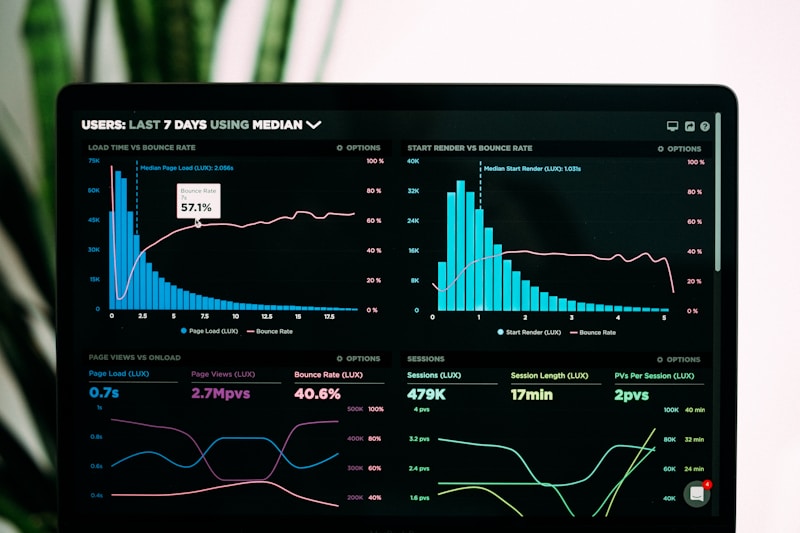
8. AEO and GEO Became the New SEO
Perhaps the most important shift for creators and bloggers: ranking on Google's page one is no longer the only goal. A growing share of searches now get answered directly by AI systems like ChatGPT, Gemini, Claude, and Google's AI Overviews — without the user ever clicking through to a website.
This has given rise to two new disciplines:
- AEO (Answer Engine Optimization): structuring content in clear, direct, question-and-answer formats so AI systems can easily extract and reference your answers.
- GEO (Generative Engine Optimization): building topical authority and clear, well-organized content so generative AI tools are more likely to cite you as a trusted source.
In practice, this means content that clearly explains what it's about, avoids fluff, uses real structure (headings, lists, direct answers), and demonstrates genuine expertise has a real advantage — both with human readers and with the AI systems now sitting between creators and their audience. If you want a step-by-step example of how to execute this correctly, check out our tutorial on How To Use ChatGPT To Write Articles: A Step-By-Step Guide For Beginners (2026).
9. AI Side Hustles Kept Growing — With More Realistic Expectations
The "get rich overnight with AI" hype has cooled slightly, replaced by more grounded advice. Across dozens of recent side-hustle breakdowns, a consistent pattern has emerged: AI works best as leverage on a skill you already have, not as a replacement for having a skill at all.
The most commonly recommended beginner-friendly AI side hustles right now include:
- AI-assisted social media management for small businesses
- Content editing and repurposing across platforms
- No-code AI chatbot or custom-GPT building for busy professionals
- Digital products such as prompt packs, templates, and guides
- AI-assisted freelance writing, research, and reporting
Realistic expectations matter here: most sources now point to beginners earning a modest few hundred dollars a month in their first six months, growing steadily with consistency rather than a single viral moment. If you want to jump in with actionable workflows, read our detailed breakdowns on How To Make Money With AI In 2026 (11 Real Ways That Actually Work) and explore The Ultimate Guide To Earning $5,000+/Month With Smart Automation.
10. AI Disputes Over Data and Ownership Intensified
Friction between AI companies and content creators kept escalating. Major publishers continued pushing back publicly against AI companies using published content without clear compensation, while entertainment industries introduced new rules — including decisions that AI-generated performances and writing shouldn't qualify for major awards. Public figures have also been taking active legal and business steps to protect their voice and likeness from unauthorized AI use.
The bigger picture: ownership, compensation, and consent around training data remain one of the least settled — and most consequential — debates in AI right now.
11. "AI PCs" and On-Device Processing Are Reshaping Hardware
Alongside wearables, ordinary computers are quietly getting an AI upgrade. Chipmakers have been racing to build processors with dedicated neural processing units (NPUs) designed specifically to run AI models locally, without sending every request to a distant data center. The pitch is simple: faster responses, better privacy, and lower reliance on internet-dependent cloud AI.
Adoption so far has been mixed — some buyers are genuinely excited about running AI assistants offline, while others don't yet see enough difference to justify upgrading. But the direction is clear: over the next year or two, "does it have AI built in" is likely to become as standard a buying question as "how much storage does it have."
12. Infrastructure Outages Are Becoming Bigger News
As more businesses build entire workflows on top of AI APIs, outages have started making headlines the way major cloud outages used to. A widely reported multi-hour disruption at one major AI provider this year knocked out chatbot access, developer tools, and automated coding pipelines all at once, leaving engineering teams unable to run scheduled tasks until the issue was resolved.
The takeaway for anyone building a business around a single AI tool: relying entirely on one provider carries real operational risk. Beginners running AI-dependent side hustles should treat this the way experienced freelancers treat losing a single client — a good reason to have a backup tool or workflow ready.
13. Healthcare and Science Are Quietly Where AI Is Having Its Biggest Real-World Impact
Away from the chatbot headlines, AI is making steady, less flashy progress in fields like medical diagnostics. Startups have been using AI to analyze retinal scans for early signs of eye disease, and pharmaceutical and research teams continue leaning on AI models for drug discovery and protein-structure work. These applications rarely trend on social media, but they arguably represent AI's most meaningful impact so far — faster, cheaper, more accessible screening in places where specialists are scarce.
Frequently Asked Questions About AI News & Trends in 2026
What is the biggest AI trend right now in 2026?
The biggest overall trend is the shift from AI as a chat tool to AI as an integrated system — embedded in coding workflows, advertising, wearable devices, and everyday business software, rather than used only through a chatbot window.
What is AEO and why does it matter for bloggers?
AEO stands for Answer Engine Optimization. It means structuring content — clear headings, direct answers, and organized Q&A sections — so AI systems like ChatGPT, Gemini, and Google AI Overviews can easily read, understand, and cite it when answering user questions.
Is it still worth starting an AI side hustle in 2026?
Yes, but with realistic expectations. The side hustles gaining the most traction combine AI tools with an existing skill — writing, design, social media, or organization — rather than relying on AI alone. Most beginners should expect gradual growth over months, not instant income.
Are AI tools getting cheaper?
Generally, yes. Increased competition, especially from open-weight models, has pushed prices down significantly for many AI tools and APIs, giving beginners and small businesses more affordable options than a year ago.
How is AI regulation affecting everyday users?
Most new AI regulations target companies and developers directly — safety testing, data handling, and deployment rules — rather than individual users. However, regulation can affect which AI tools and features are available in certain countries, so it's worth staying aware if your work depends on a specific AI platform.
Where can I keep up with AI news without getting overwhelmed?
Follow a small number of reliable, frequently updated sources rather than trying to track everything. Weekly roundups (like this one) are usually more useful for beginners than daily breaking-news feeds, which can be overwhelming and repetitive.
Have a question about any of these AI trends, or want a beginner walkthrough on a specific tool mentioned above? Drop it in the comments — future posts on AI Path 4 Beginners will dig deeper into the trends you want explained.



0 Comments